

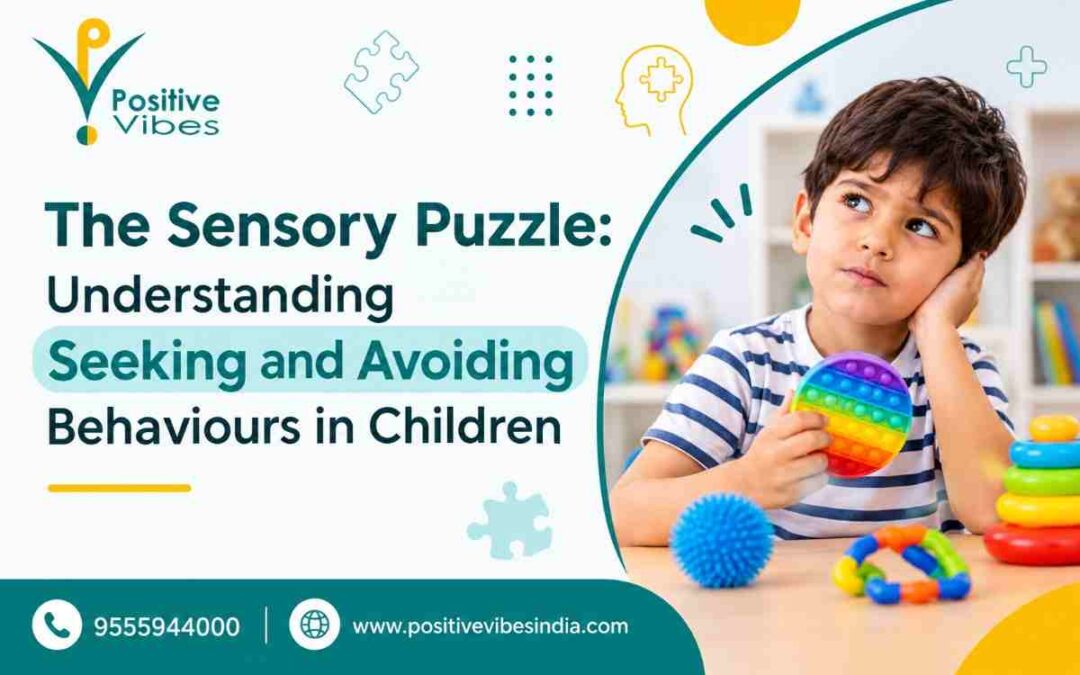
Before everything else, children feel through their senses. But these senses sometimes differ from one another. Children experience every touch, sound, smell, and movement, and even the feelings of clothes that can affect their skin. Sometimes, they may urge for more sensory experiences, while others can avoid it whole heartedly. These patterns are often described as sensory seeking and sensory avoiding.
It is not necessary for parents to be very anxious about every small change in their kids, but it is important to be aware of when to seek professional guidance. In some cases, these behaviours may be linked with Sensory Processing Disorder, although sensory differences can also occur alongside conditions such as autism, ADHD, or developmental difficulties.
What Is Sensory Processing Disorder?
It is important to check how the brain of a child receives, reacts to, and responds to the information received by the senses. Understanding these sensory differences is important, and sensory integration therapy may help children develop better responses to sensory information through individualised therapeutic activities.
For example, a child may feel uncomfortable with the noise of the classroom, dislike the material of the clothing, seek constant movement, or have difficulty with activities involving touch.
What Is Sensory Seeking?
When a child seeks extra sensory input, they often enjoy some activities that include touch, sound, or strong physical sensations. For instance, they are constantly touching people or objects, running, jumping, and climbing frequently, chewing clothes, toys, or pencils, seeking tight hugs or strong physical pressure, finding it difficult to sit still, etc.
These behaviours are not always intentional; the child may simply be looking for sensory input that helps them feel organised or alert.
What Is Sensory Avoiding?
When a child feels uncomfortable with some sensory experience, for example, they instantly cover their ears with loud sounds, stay away from noise, dislike certain fabrics, become uncomfortable in a bright ambience, etc. These are considered Sensory Avoiding as they always try to avoid any kind of overwhelming experience.
Sensory Seeking vs Sensory Avoiding
The biggest difference between these two types is that one asks for more stimulation, while the other never wants any exposure.
However, they can never be categorised in these simple methods. There’s a possibility that a child may love jumping and running but avoid loud noise. Another child may enjoy quiet activities but become uncomfortable with certain textures.
How Can Parents Help?
Observation is the most important part for parents. Notice what happens before the behaviour and what helps the child calm down.
Sometimes simple strategies can be helpful; parents simply need to use strategies such as quiet spaces, movement breaks, structured routines, tactile activities, and suitable play experiences, which may help some children. However, sensory activities should be selected according to the child’s individual needs.
How Occupational Therapy Can Help
Any problem related to sensory problems cannot be cured on its own. Sometimes, it requires professional help. An occupational therapist may assess the child’s sensory responses and develop an individualised therapy plan.
Occupational Therapy may help the child to focus on improving attention, coordination, body awareness, self-care, play skills, and the ability to participate comfortably in daily routines.
Final Thoughts
Sensory seeking and avoiding are different issues to deal with, where one wants more stimulation, and the other tries to escape from it.
Understanding these patterns can help parents start therapy earlier and provide appropriate support. If sensory issues in children are regularly interfering with everyday life, speaking with a qualified professional can help identify the child’s needs and guide the right intervention.
Parents who want to understand more about therapy and their child’s developmental journey can also read our blog on how long occupational therapy for autism takes.