

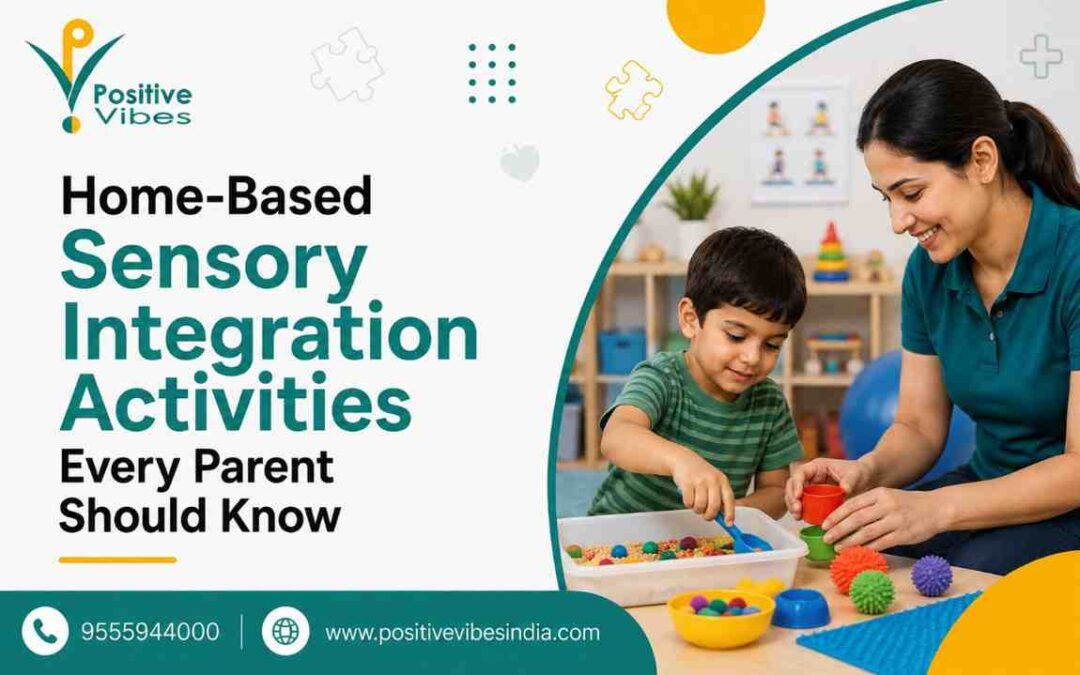
Children learn about the world through their senses. They touch, see, feel, smell, and hear to understand everything around them. But children with autism, ADHD, Down syndrome, or developmental delays may find these natural things overwhelming or disturbing. That is where sensory integration activities can make a real difference.
Some simple activities like improving focus, balance, coordination, emotional control, and confidence can be helpful. And the most important part is that parents do not need any heavy or expensive equipment to make their children learn this. Everyday household items can become powerful learning tools.
What Are Sensory Integration Activities?
For children who struggle with processing sounds, textures, movement, or touch, sensory integration activities become very important for them. Let’s have an idea about sensory integration activities! Those are playful tasks that help the brain receive, organise, and respond to sensory information more effectively.
Many occupational therapists recommend these, as it becomes very encouraging for better learning, behaviour, and independence while making therapy enjoyable.
Why Sensory Play Matters
Sensory play activities are more than just entertainment; they help to build important life skills and overall child development.
It helps children improve concentration and attention span, develop stronger motor skills, encourage problem-solving abilities, develop body awareness and balance, and make learning more enjoyable & engaging.
Easy Sensory Activities Parents Can Try at Home
1. Sensory Bin Adventure
For instance, fill a bowl with rice, beans, rajma, and some other cereals and let your child differentiate them.
These simple activities can be more interesting and encouraging to improve hand-finger coordination and tactile awareness while keeping children happily engaged.
2. Playdough Fun
The easiest occupational therapist activity that supports writing skills, hand control, and creativity is rolling, squeezing, stretching, and shaping play dough.
3. Obstacle Course
Make mini obstacles by using pillows, chairs, tunnels, cushions, or tape lines on the floor so that children can jump, crawl, balance and climb to improve coordination, balance and body control.
4. Bubble Popping Games
Blow bubbles and ask your child to pop them using one finger, both hands, or even by jumping.
This playful activity improves visual tracking, coordination, and attention.
5. Water Play
To give calming sensory input by improving hand muscle usage and concentration, let children pour water between cups, wash toys, or float different objects in a tub.
6. Texture Walk
It is important for the children to walk on different pathways to learn proper sensations. Arrange towels, foam mats, grass, bubble wrap, soft blankets, and smooth cardboard in a safe pathway.
7. Music and Dance Time
Play different types of music and encourage children to dance, clap, march, or freeze when the music stops.
Music-based movement improves rhythm, coordination, and sensory processing while reducing stress.
When Should You Seek Professional Help?
Homemade sensory activities are truly beneficial for kids, but sometimes it is important to know when your kid needs professional help. If your child frequently avoids touch, has frequent meltdowns, struggles with balance, cannot focus on daily tasks, or shows delayed motor development, consulting an occupational therapist is a wise step.
Final Thoughts
Simple sensory activities at home can be playful for both children and parents. Whether it’s playing with water or jumping like frogs, it’s very important to keep the child busy and engaged to build stronger sensory processing skills and support healthy child development.